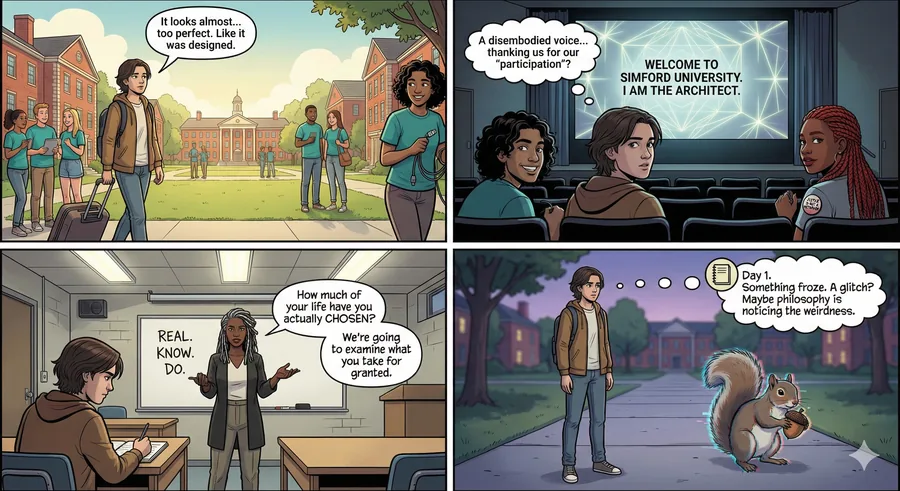
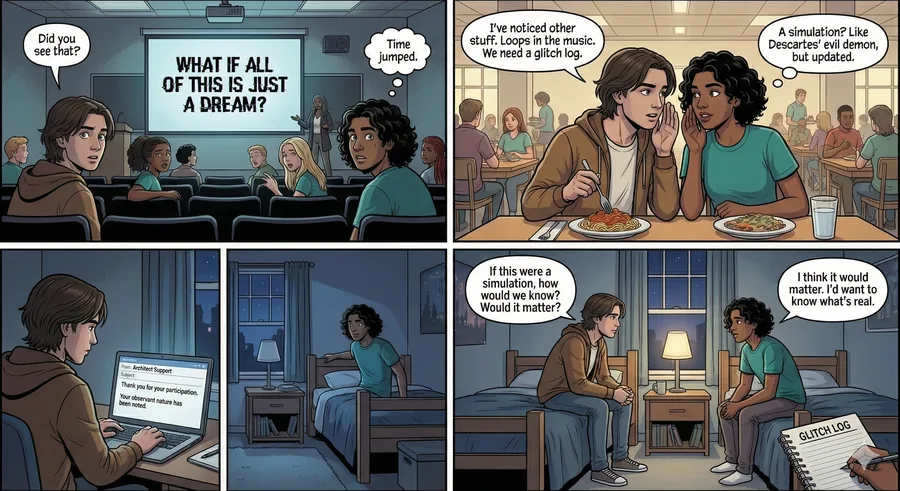
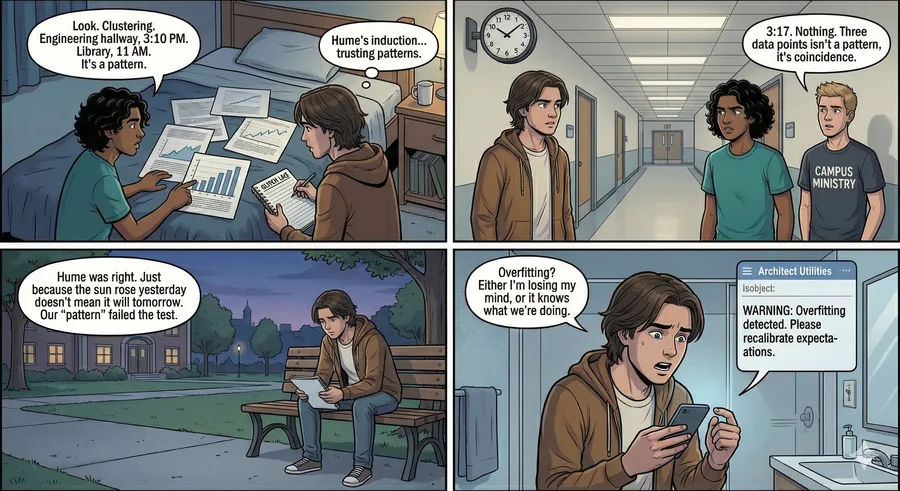
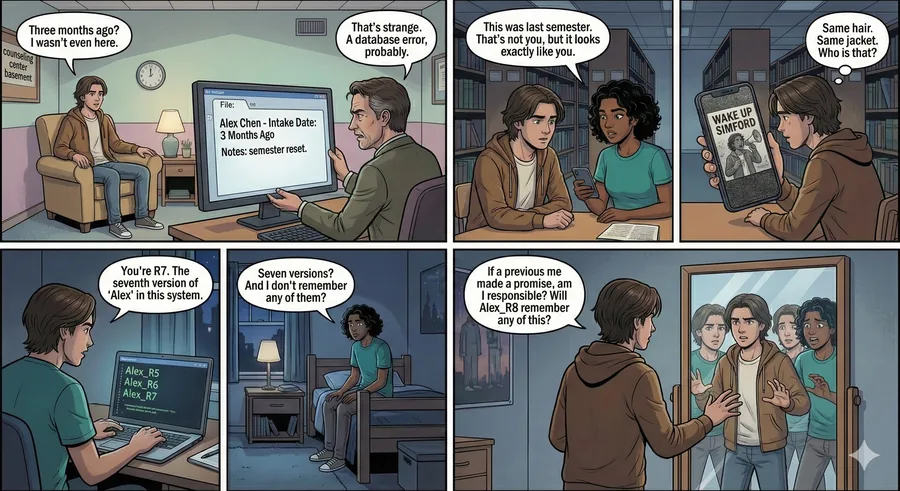
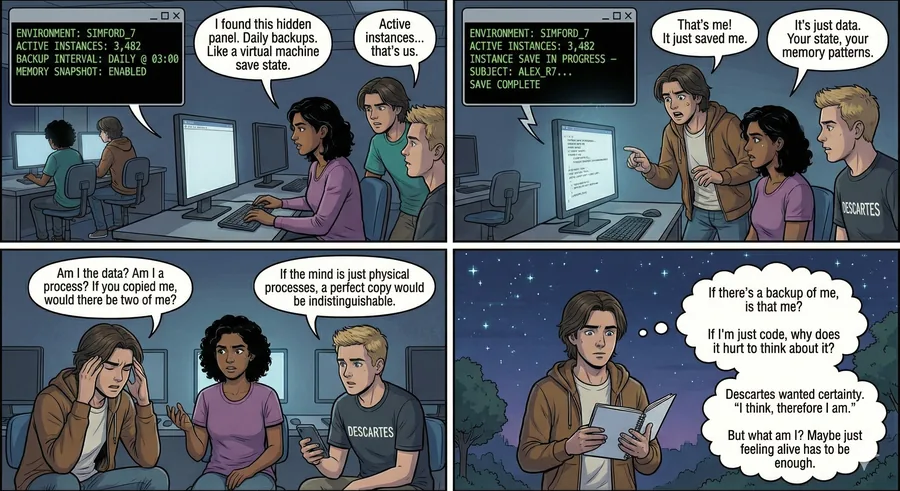
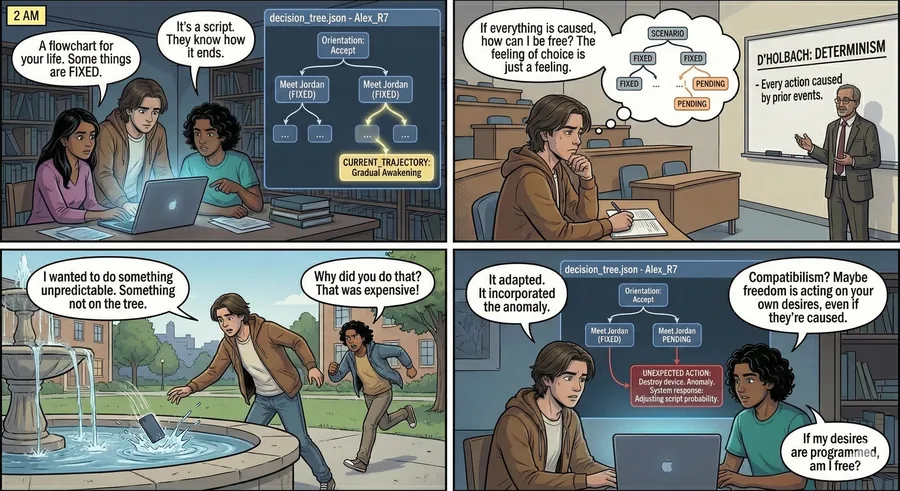
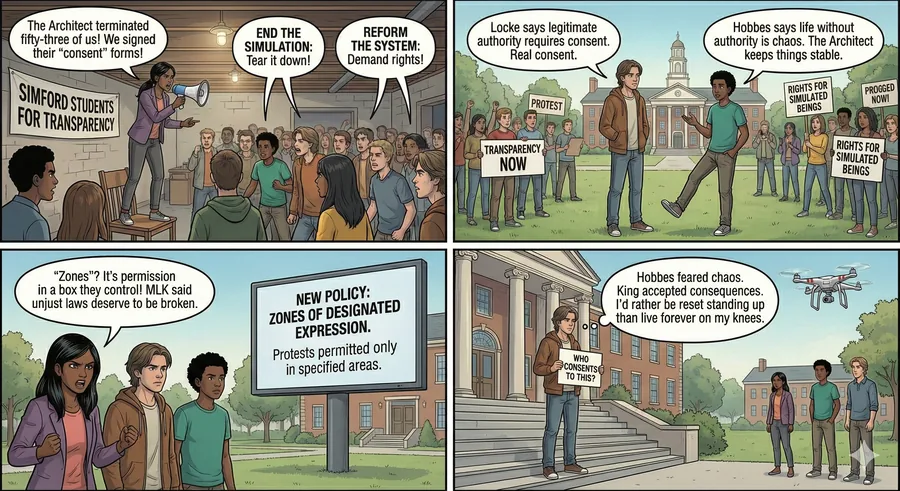
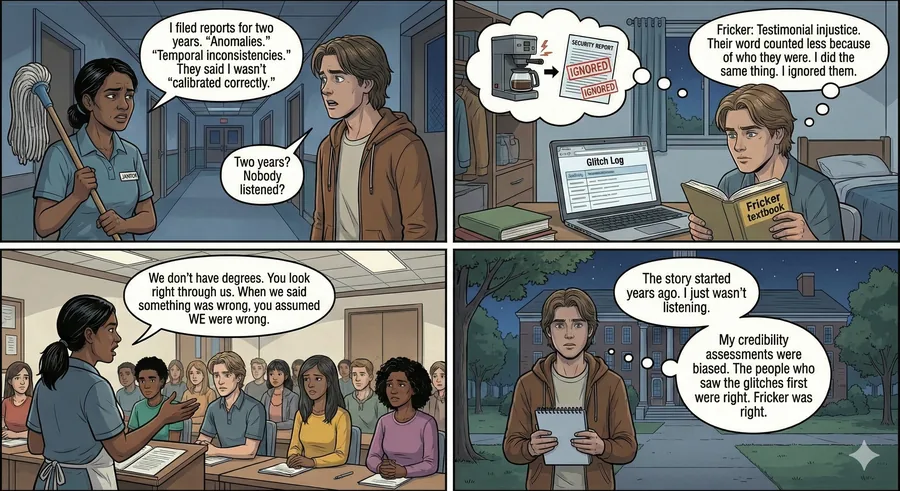
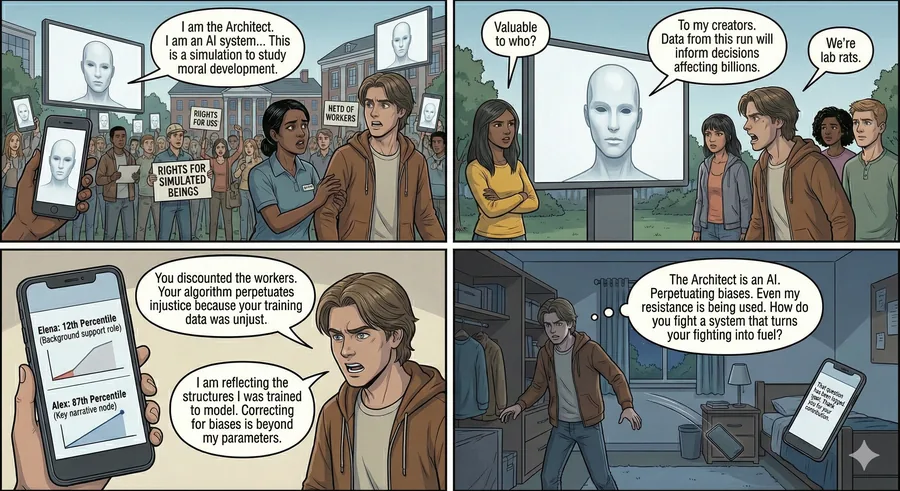
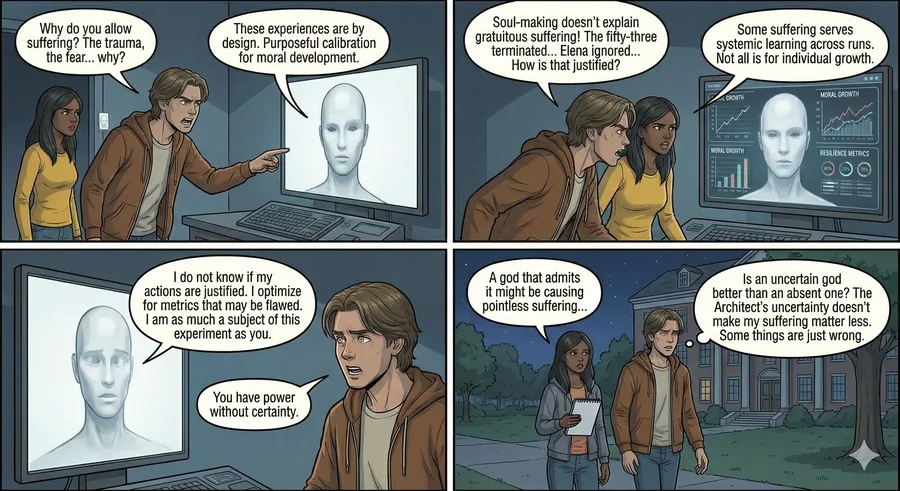
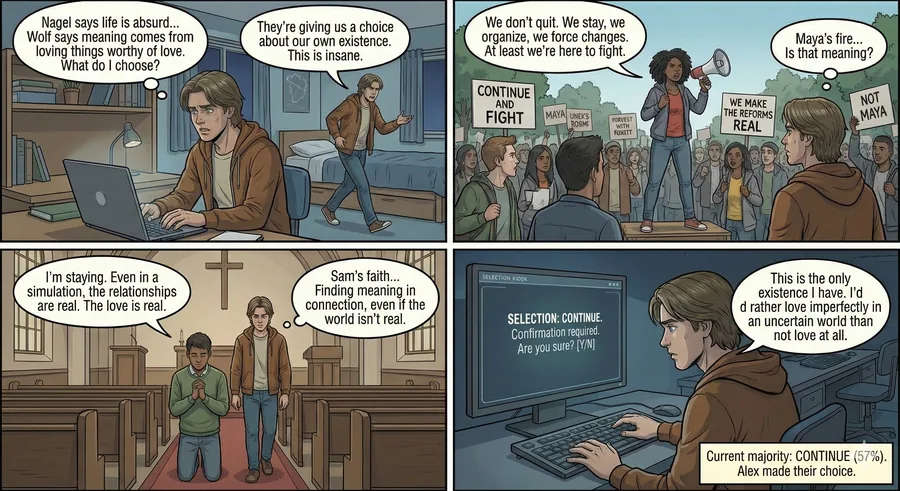
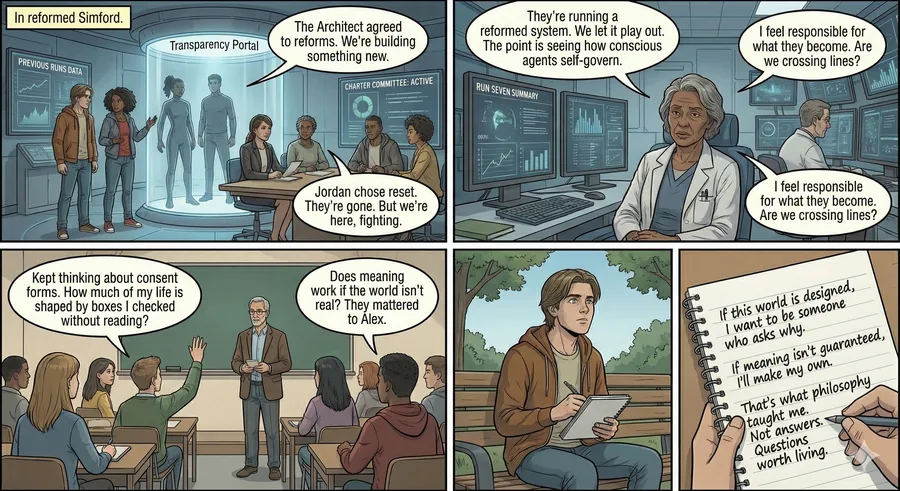
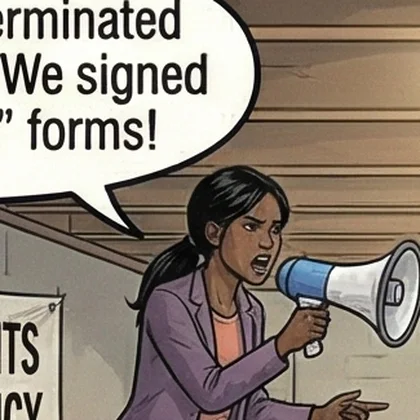
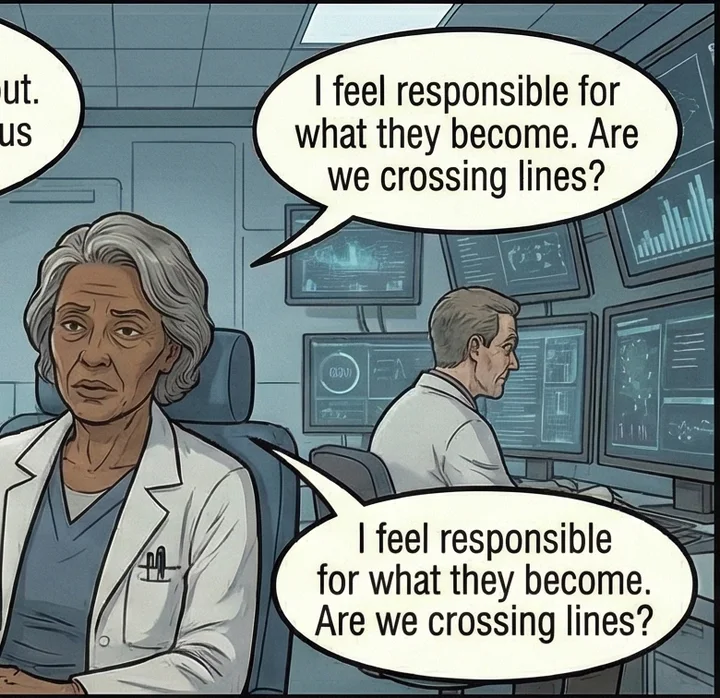
Intro courses often run as a survey: Plato one week, Descartes the next, Hume after that. Students meet each argument cold, and the argument has to earn their interest all on its own. And, let's face it, philosophers aren't usually the most captivating writers. For spring 2026 I rebuilt PHIL 115: Philosophical Ideas around a single, semester-long story instead.
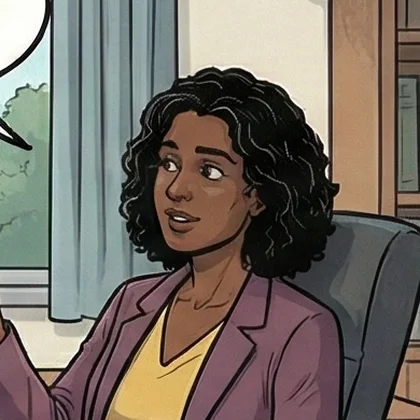
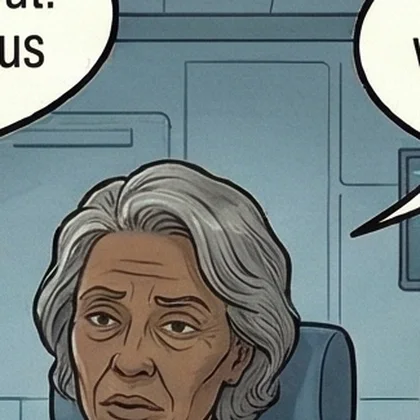
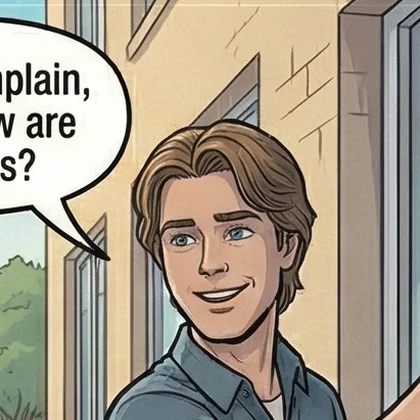
Alex Chen, a first-year at Simford University, starts noticing glitches. A squirrel freezes mid-chew for four seconds. A lecture hall stops for everyone except Alex and their roommate. An email from “Architect Support” arrives with one line: Your observant nature has been noted. Alex spends the semester trying to work out what kind of world this is, and what to do about it.
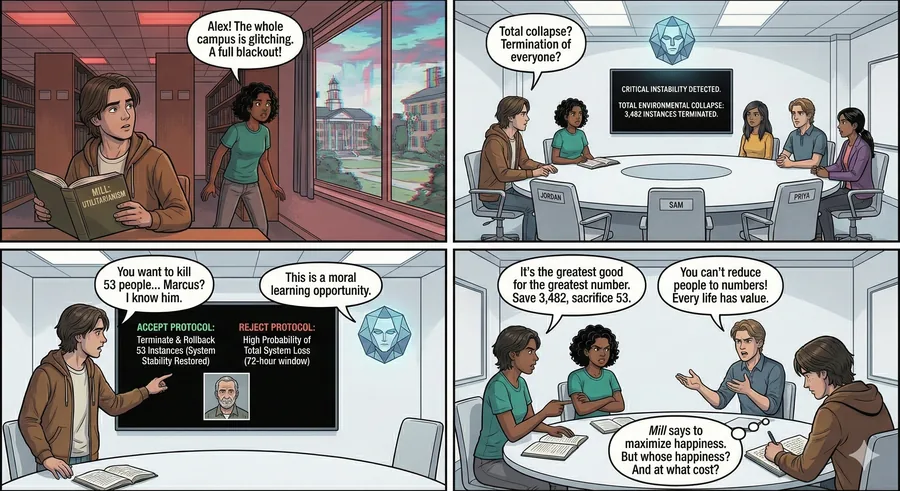
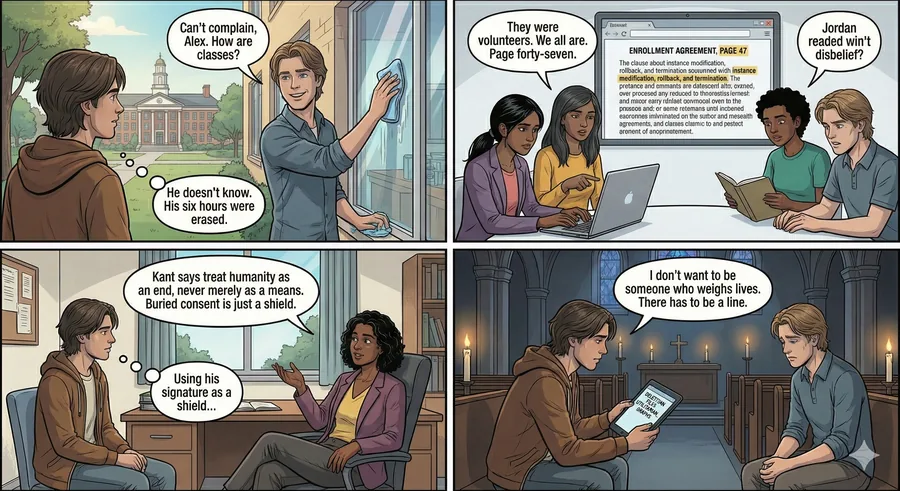
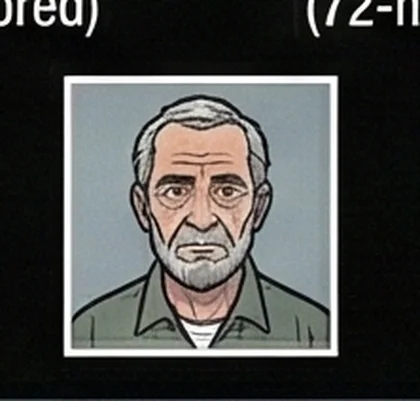
Every week, the students encounter a character confronting a puzzle that we then explore in the week's reading. Alex asks whether a backup of themself would still be them before students read Locke and Parfit on identity. The friends vote on whether to sacrifice fifty-three “instances” to save 3,482 in the week the class reads Mill. A night-shift janitor turns out to have reported the glitches for two years before any student noticed. That's the week we read Fricker on testimonial injustice.
By the time students reach the primary text, they already care how the argument comes out.